Wildflower Seascape Backgrounds: 12 JPGs for Creative Projects
A Coastal Garden Meets the Ocean
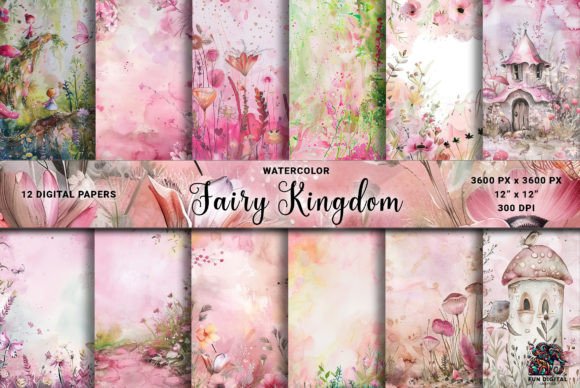
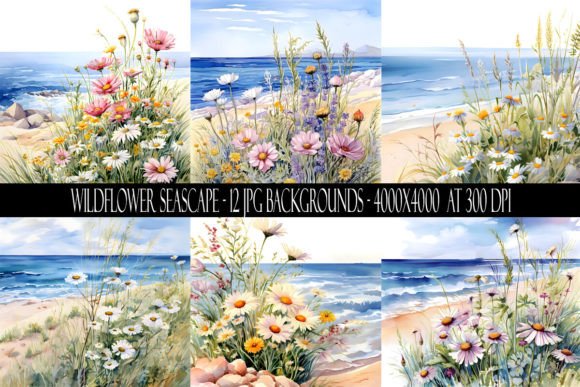
There’s a particular kind of beauty that happens where wildflowers meet the sea—salt air tangled with pollen, petals catching the breeze above tide pools. The Wildflower Seascape Backgrounds collection captures that intersection. Twelve digital papers blend soft botanical illustrations with oceanic textures, creating a visual language that feels both grounded and expansive.
Each background in this set tells a slightly different story. Some lean into dense clusters of lupines and poppies rendered against muted shoreline horizons. Others strip back to sparse, delicate stems silhouetted over watercolor washes of seafoam and sand. The color palette stays within natural territory—dusty lavenders, sage greens, warm ochres, and the kind of blue-grey you see on overcast coastal mornings. Nothing feels forced or overly saturated.
What makes these backgrounds work isn’t just their aesthetic. It’s their versatility. At 4000 x 4000 pixels and 300 dpi, each JPG holds enough detail for large-format printing without pixelation. The non-seamless format means every design stands on its own—no repeating tiles to manage, no awkward pattern breaks to hide. You download a zip file, extract twelve high-resolution images, and start working immediately. The watermark vanishes upon download, so what you see is exactly what you get.
Where These Backgrounds Actually Work
I’ve seen plenty of floral background packs that look beautiful in preview mockups but fall apart in real design work. Either the resolution disappoints, the licensing restricts commercial use, or the aesthetic is too narrow for anything beyond wedding invitations. This collection sidesteps those problems.
For brand identity and packaging design, these backgrounds offer a sophisticated alternative to flat color fields or generic stock imagery. A small-batch skincare company could use one as the foundation for product labels, wrapping a coastal wildflower texture around a soap box or candle jar. The organic feel pairs well with brands positioning themselves around natural ingredients, sustainability, or artisan craftsmanship.
Editorial designers and publishers will find them useful for magazine spreads, book covers, and interior chapter pages. The backgrounds don’t compete with typography the way some patterned papers do. Their soft edges and muted tones create a surface that supports text rather than fighting it. Think of a cookbook cover featuring coastal recipes, or a memoir about summers spent near the shore—the backgrounds add context without overwhelming the title treatment.
Digital content creators working on social media graphics, blog headers, or website banners can layer these behind quotes, announcements, or promotional material. The 4000-pixel dimension gives enough breathing room to crop for different aspect ratios—Instagram squares, Pinterest verticals, Facebook covers—without losing the essential composition. Because they’re JPGs rather than layered files, they load quickly on web platforms and integrate smoothly into tools like Canva, Adobe Express, or Figma.
Crafters and hobbyists benefit from the print-on-demand licensing. You can use these backgrounds on physical products sold through platforms like Redbubble, Society6, or your own Etsy shop. Phone cases, tote bags, art prints, greeting cards—anything where a beautiful surface texture adds perceived value. The commercial license removes the legal anxiety that comes with using design assets in products you intend to sell.
Practical Guidance for Working With These Backgrounds
Choosing the right background from a set of twelve requires more than picking your favorite. Consider the emotional tone your project needs. The wildflower-dense designs feel romantic, nostalgic, and slightly whimsical. The sparser compositions read as calm, minimalist, and contemporary. Matching background personality to project personality prevents visual dissonance.
Test your typography choices against the backgrounds before committing. Sans serif fonts with generous letter-spacing tend to sit cleanly over these designs, especially in white or dark navy. Script fonts can work for accent words or short headers, but long passages in script will disappear into the botanical detail. Serif fonts with moderate contrast—think transitional or modern styles—hold up well at larger sizes. The key is maintaining enough contrast between text and background without resorting to heavy drop shadows or colored boxes that feel tacked on.
Layering techniques matter here. A slight overlay of semi-transparent color—say, a warm cream at 70% opacity—can push the background further back, giving foreground elements more visual priority. Gaussian blur applied to the background at low intensity softens the floral detail just enough to support body text. These are standard design moves, but they’re worth emphasizing because the backgrounds reward thoughtful composition.
Evaluate project fit honestly. If your brand identity leans industrial, tech-forward, or aggressively minimal, wildflower seascapes might feel incongruent. Not every beautiful asset belongs in every project. But for brands, publications, and products that embrace organic warmth, coastal references, or botanical themes, this collection fills a genuine gap. It provides twelve distinct options within a cohesive aesthetic, which is more useful than a single background or a scattered mix of unrelated textures.
The commercial and print-on-demand licensing deserves attention. Many background packs restrict usage to personal projects or require separate commercial licenses. This collection includes both commercial and POD rights in the base purchase, which matters if you’re a small business owner building product lines or a designer creating assets for clients. Read the specific license terms, as always, but the inclusion of these rights upfront saves time and money.
File management is straightforward. The zip format keeps everything organized during download. Extract the files, rename them if needed for your workflow, and store them in your design asset library alongside your other premium font collections, texture packs, and brand resources. Having a curated library of high-quality backgrounds like these means you spend less time searching stock sites and more time actually designing.
Final Thoughts on Texture and Intention
Good design assets do more than decorate. They communicate. A wildflower seascape background tells your audience something about warmth, nature, and the meeting point between earth and water. Used intentionally, these twelve JPGs become part of your visual vocabulary—reliable, beautiful, and ready for commercial work without licensing headaches.